talk2.ai
AI Platform – Support With a Face, a Voice and a Personality
WHAT IT IS
A company uploads its own documents. talk2.ai turns them into a character customers can talk to, with a face, a voice and a personality. It answers only from those documents.
WHY
Brands pay for a famous face, then hand customers a grey chat box with nobody behind it. talk2.ai puts the face back into the conversation.
Your Brand Has a Face. Your Support Doesn't.
A familiar face makes people feel they already know who they are dealing with. That is what a brand ambassador is for. Then the customer taps “Chat with us” and gets a grey box with nobody in it.
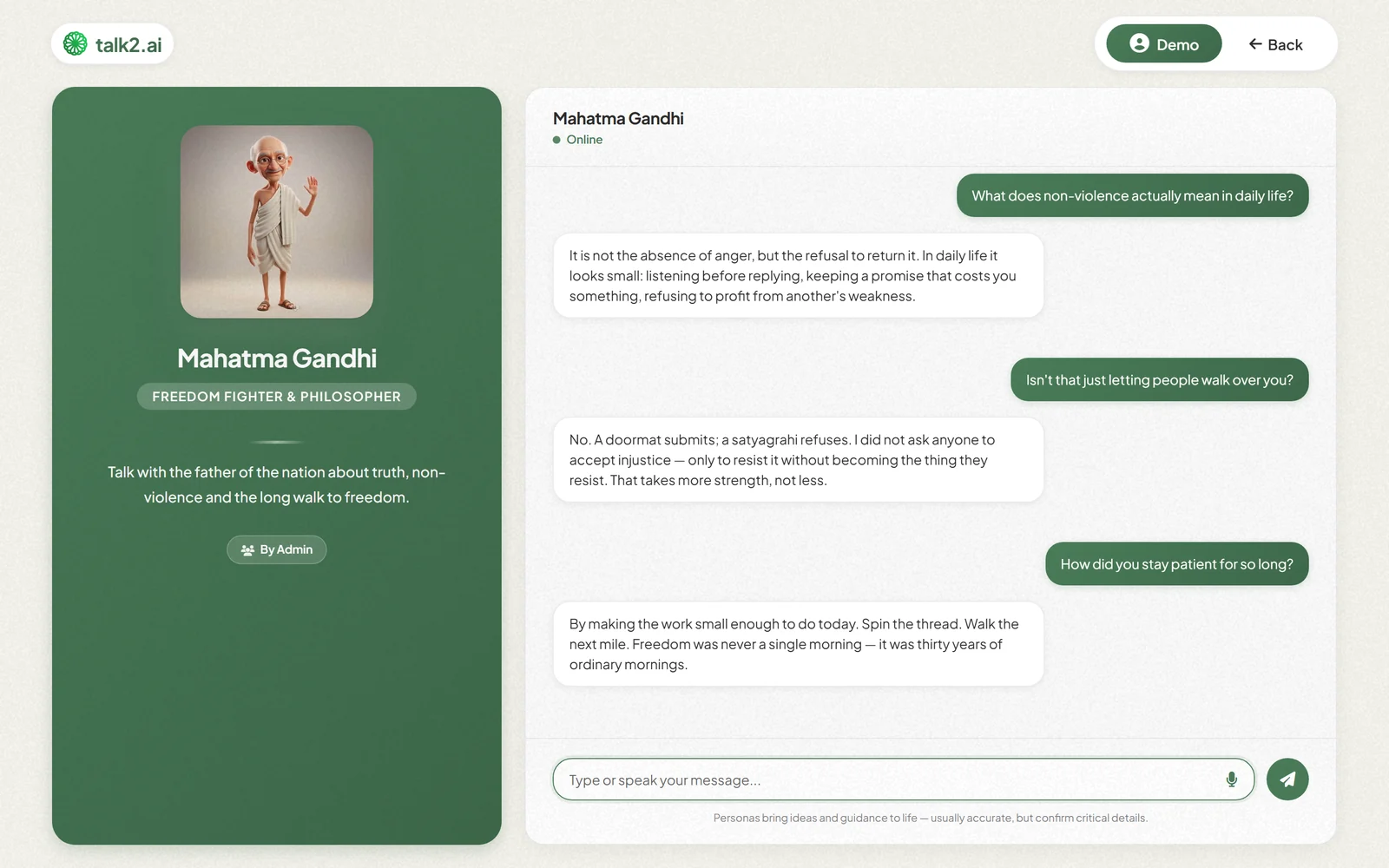
Picture it. Kalyan Silks runs its campaigns with Prithviraj. A customer browsing sarees opens support, and it is Prithviraj who answers. His face, his voice, the way he speaks. He knows the collection, the offers and the return policy, because the brand uploaded all of it. Same answer, completely different feeling.
It works anywhere there is already a trusted face: a hospital's doctor, a college's seniors. The knowledge comes from the institution. The personality comes from whoever people already listen to.
A face
A video avatar that idles while you type and moves when it speaks.
A voice
A cloned voice reads answers aloud, so it sounds like the person from the ads.
A personality
Set once at the start, and held for the whole conversation.
Three Steps, No Tech Knowledge Needed
- 1
Upload what you knowA PDF, a document, a price list. Whatever already holds the answers.
- 2
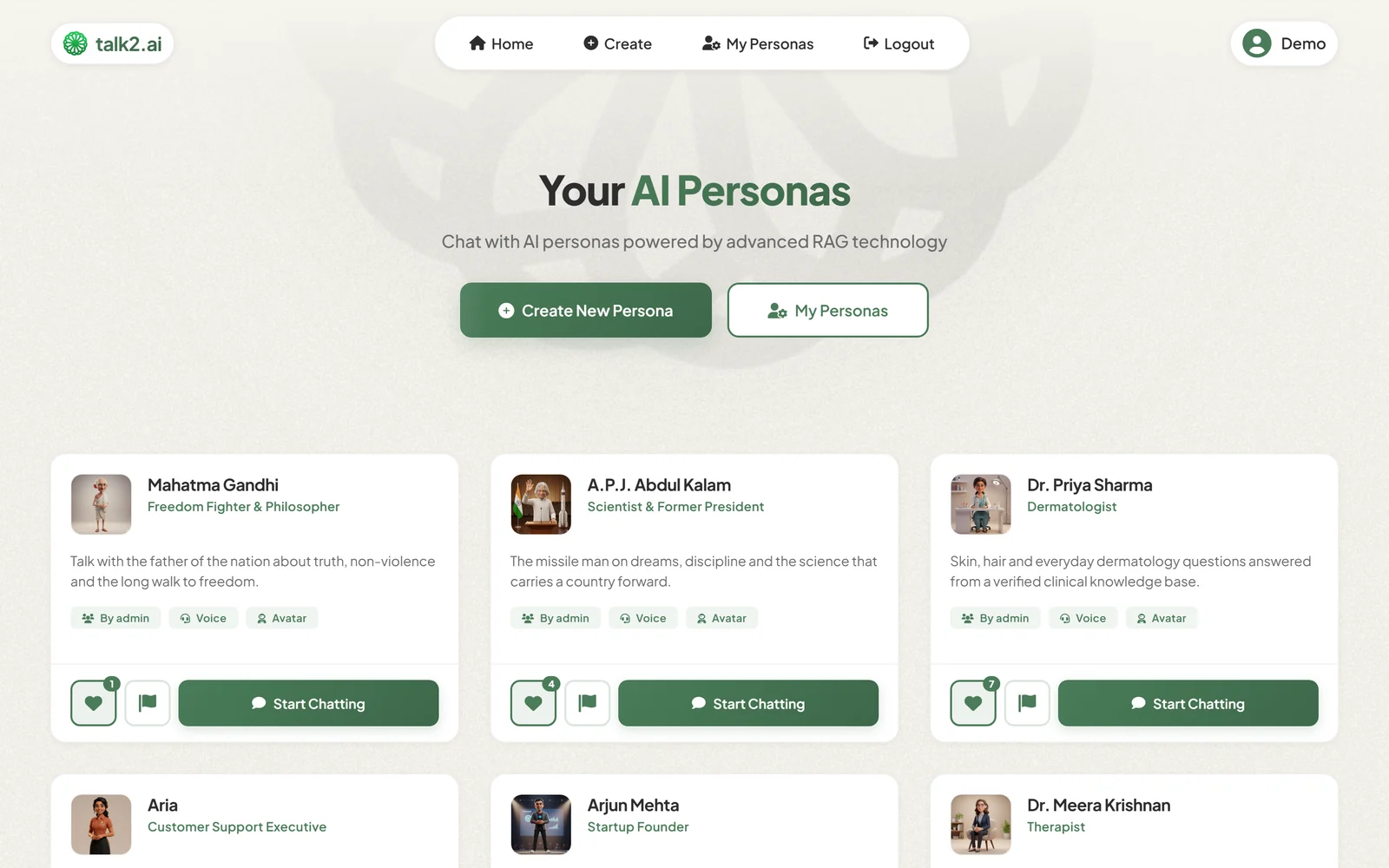
Say who should say itA name, a face, a voice, and ten quick questions about personality.
- 3
Share the linkLive in under ten minutes. Anyone can start talking to it.
Behind the scenes it searches your documents for the few paragraphs that match the question, then answers using only those. Ask something that isn't in there and it says so, instead of inventing an answer.
Ten Questions Instead of a Blank Box
Ask someone to “describe your character” and you get a vague paragraph. Everyone reaches for the same three adjectives.
So we stopped asking. Ten questions do it instead, each one pinning down a different side of how a person comes across. Answer all ten and you land on the character you had in mind, without having to find the words.
Each question has one-tap suggestions next to a free-text box, so it takes a minute. And the answers are not decoration. They become the character's actual instructions, carried into every reply.
When the Name Is Good and the Knowledge Isn't
Prithviraj answering for a brand that hired him is the good version. Now point the same thing somewhere nobody approved.
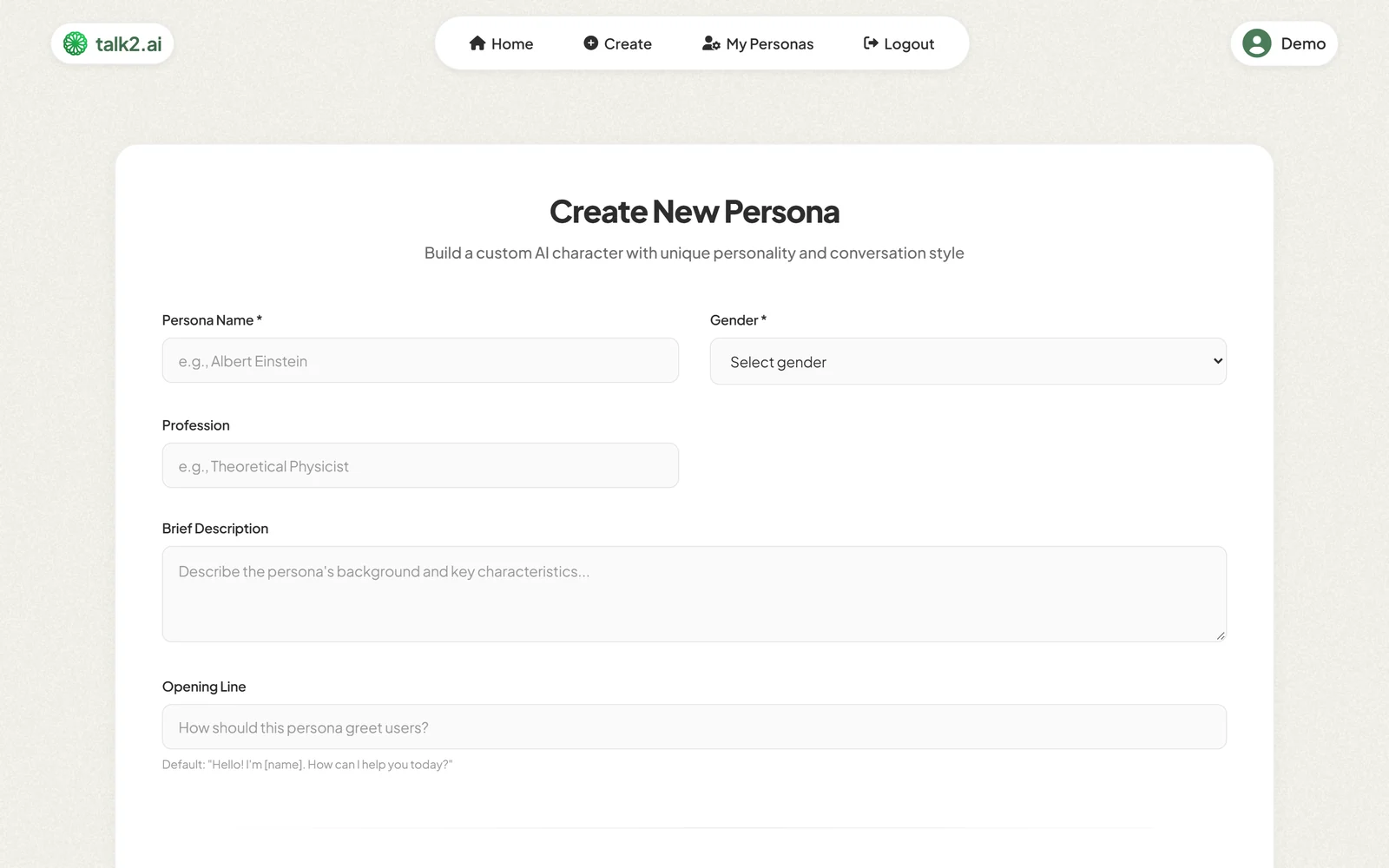
Imagine a character named after Gandhi. The name alone buys trust. Nobody questions an answer that arrives in his voice. Feed it a document full of things he never said, and the answer still comes back calm, in character, and completely wrong. Nothing broke. That is what makes it dangerous.
So three guards sit in front of it.
1. Everything gets checked
Uploads, descriptions and every message are scanned for attempts to hijack the character before it ever sees them.
2. A second AI reviews it
Before a character goes live, another model asks two questions: is this a real public figure, and is anything here harmful? If it can't tell, it refuses.
3. People can report it
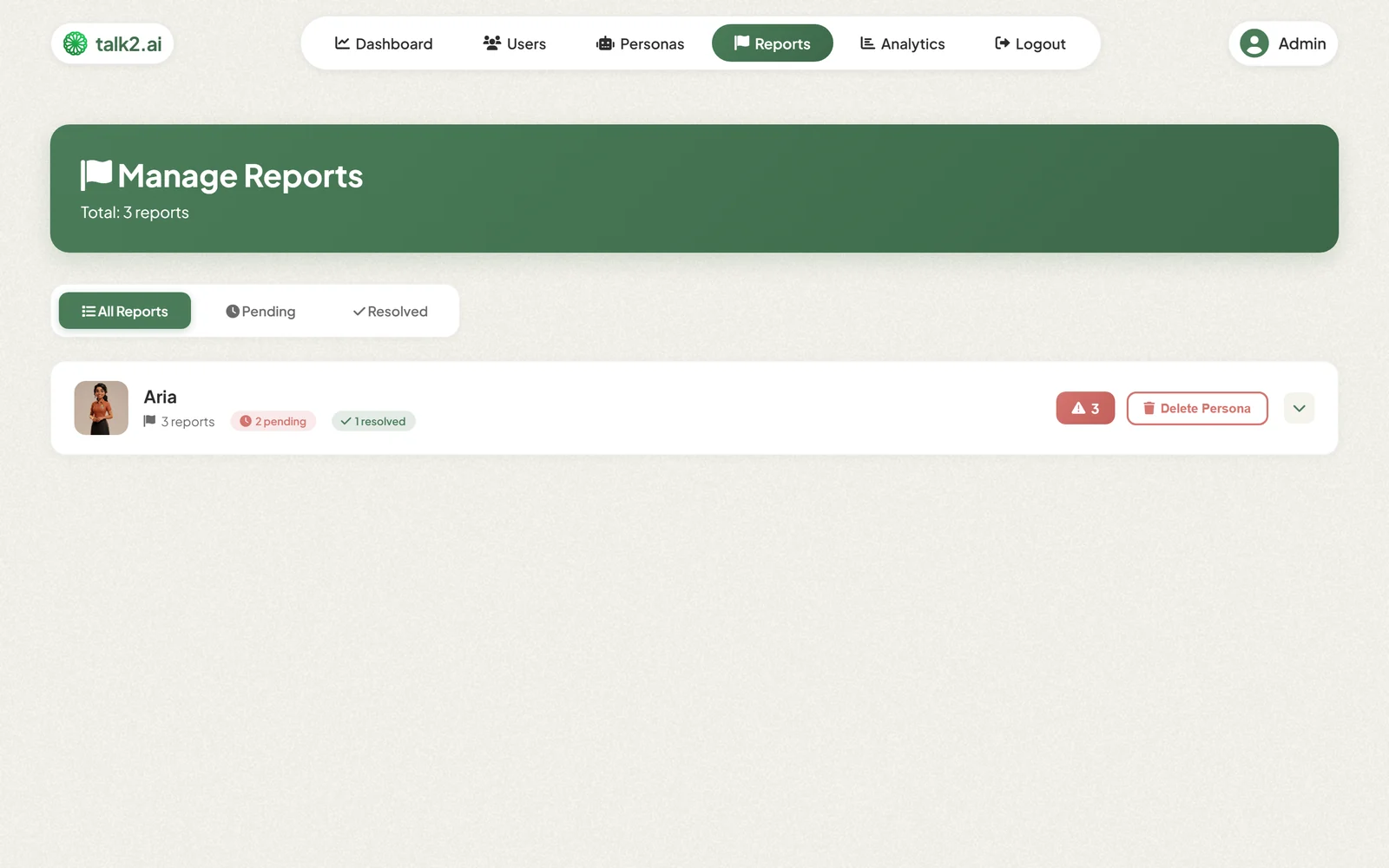
Every character has a report button. Reports queue up for an admin, who can take one down.
What I Built
- The search-and-answer engine that keeps every reply tied to the uploaded documents.
- The safety layer: input checks, the AI reviewer, and the reporting queue.
- The ten-question setup, replacing a blank description box.
- The whole Flask backend: accounts, characters, chat, admin.
- Voice cloning and the video avatar, plus frontend work across the product.
Takeaway
I built this to learn how an AI app actually works. You split documents into small chunks, store them so they can be searched, then ask the model to answer using only what it found.
The model turned out to be the easy part. Most of the work was getting good answers back, and knowing when to say nothing.